
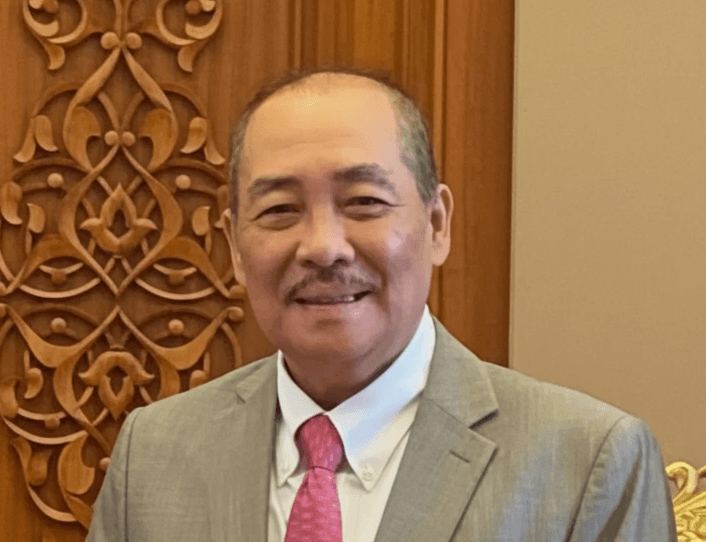
Kota Kinabalu (Feb 4) - Chief Minister Datuk Seri Hajiji Noor has officially assumed the role of Chairman of Tanjung Aru Eco Development (TAED), signalling a new chapter for one of Sabah’s most closely watched coastal redevelopment projects.
The transition of leadership took place during a brief handover ceremony at Menara Kinabalu, where former chairman Tan Sri Pandikar Amin Mulia formally passed the responsibility to the Chief Minister. Several senior state leaders and officials were present to witness the change, underscoring the importance of TAED to Sabah’s long-term development agenda.
TAED was established as a state-owned special purpose vehicle to spearhead the redevelopment of the Tanjung Aru coastline, a site historically known as one of Kota Kinabalu’s most iconic beachfront areas. The project was conceived to transform the former Tanjung Aru Golf Course and surrounding coastal land into a mixed-use eco-friendly urban development, integrating green spaces, public amenities, commercial zones and improved coastal protection.
Since its inception, the Tanjung Aru Eco Development initiative has drawn strong public interest due to its scale, environmental sensitivity and strategic location near the city centre and the international airport. Over the years, the project has undergone refinements to align development goals with environmental sustainability, coastal resilience and public accessibility, reflecting growing awareness of climate change and shoreline protection.
With the Chief Minister now directly chairing TAED, the move is widely seen as an effort to strengthen oversight, coordination and accountability in delivering the project’s objectives. For Sabahans, this leadership shift carries particular significance, as Tanjung Aru is not only a major recreational and tourism asset but also a symbol of Kota Kinabalu’s identity. Decisions made under TAED will directly affect public access to the coastline, job creation, tourism growth and environmental stewardship.
The involvement of top state leadership is expected to reassure Sabahans that the redevelopment will prioritise public interest, environmental balance and long-term economic benefits, while ensuring that the transformation of Tanjung Aru remains aligned with Sabah’s broader development vision.