
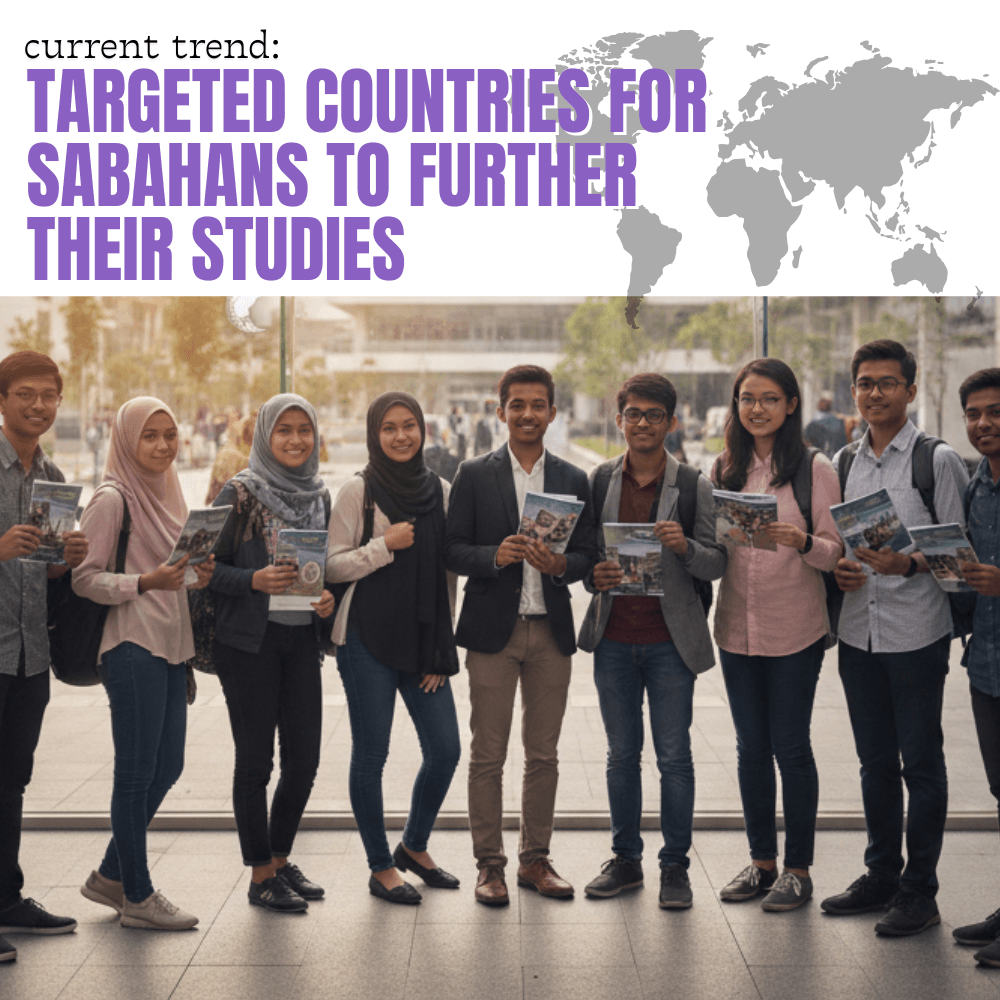
Young Sabahans are increasingly looking beyond traditional destinations when planning tertiary study overseas. While Australia and the United Kingdom remain popular choices because of historical links and recognised degrees, recent trends show growing interest in nearby Asian countries plus Canada and New Zealand, driven by cost, scholarships, and shifting visa/work-rights policies.
Australia and the UK: the familiar favourites
Australia and the UK continue to attract Sabahans because of established pathways, wide course choices, and large Malaysian communities that ease transition. Australian universities also maintain strong recruiting ties with Sabah through education agents and local counselling centres in Kota Kinabalu, and initiatives such as branch campuses and transnational partnerships make articulation smoother for Sabah-based students.
Canada and the United States: quality + post-study opportunities
Canada and the U.S. remain attractive for Sabahans seeking research or professional degrees and longer post-study work options. Canada's favourable immigration pathways for graduates, and the high global ranking of many North American institutions, draw students aiming for STEM and business programmes. Recruitment campaigns and scholarship offers targeted at Southeast Asia have increased awareness of these options.
Regional Asian destinations — China, Taiwan, Japan, South Korea, Singapore
A noticeable shift is toward Asian destinations. China and Taiwan appeal for language, engineering and medical programmes often at lower tuition and living costs; scholarships and bilateral education agreements have boosted enrolments. Japan and South Korea are attractive for technology and design fields, supported by scholarship schemes and industry links. Singapore — geographically closest and culturally familiar — is especially popular for short professional courses and postgraduate programmes. These regional options are perceived as cost-effective and culturally proximate alternatives to Western study.
Newer choices: New Zealand and emerging European options
New Zealand’s recent policy moves to expand international student intake and ease student work rights have made it more appealing, particularly for those considering lifestyle and work-study balance. European countries such as Germany and Ireland are also emerging as options, offering low- or no-tuition programmes and strong engineering, IT and business schools — attractive to Sabahans mindful of cost per graduate year.
Why these shifts matter for Sabahans
Several drivers explain these patterns: shifting visa regimes in traditional destinations, rising tuition and living costs, and better information about alternatives closer to home. Malaysia’s own push to internationalise higher education (and attract foreign students) has also increased two-way mobility, creating blended pathways — Sabah students can begin locally and transfer to partner campuses overseas. Local agents and Sabah-based education centres increasingly promote diverse options beyond the “big four” countries.
Practical tips for Sabahans planning to study abroad
- Match aims to country: choose destinations based on career goals (research vs professional licensing vs migration).
- Compare total cost: factor living expenses, scholarships, and potential part-time work rules.
- Check articulation: many students start at Malaysian institutions with transfer agreements to overseas partners.
- Use accredited agents and official sources (Education Malaysia, university international offices) to verify offers and visa rules.
Conclusion
For Sabahans, the landscape of study destinations is broadening. Australia and the UK remain strong, but a growing number of students are opting for Asian neighbours, Canada, New Zealand, and select European countries — choices shaped by cost, scholarships, visa policies and clearer local pathways. Prospective students who research costs, work rights, and articulation agreements will be best placed to choose a country that fits both academic ambitions and long-term plans.
By Barto Erik