
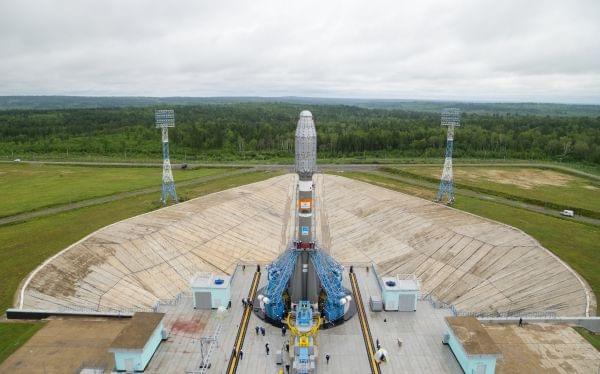
Kota Kinabalu (Jan 31) - Russian launch service provider Glavkosmos is in discussions with Sabah government-linked investment firm Qhazanah Sabah on the potential development of a rocket launch facility, or spaceport, in the state.
Preliminary assessments by Glavkosmos have identified Sabah as the most suitable location in Southeast Asia for space launches. The study found that Sabah’s geographical position allows for low Earth orbit (LEO) and sun-synchronous orbit (SSO) missions to be carried out safely, as rocket stages would fall into the sea to the north and east of the state without posing risks to populated land areas.
The proposed spaceport is expected to generate significant economic benefits for Sabahans, including the creation of more than 2,000 high-income jobs if the project proceeds. Such opportunities could strengthen local talent development in aerospace, engineering and supporting industries, while stimulating downstream economic activity.
The proposal follows a visit to Kota Kinabalu by a Glavkosmos delegation led by its deputy managing director, Vitaly Safonov, where discussions were held with Qhazanah Sabah representatives. The Russian firm’s interest aligns with Malaysia’s broader plan, announced last year, to develop its own rocket launch capability. At that time, three potential locations were shortlisted nationwide: Pahang, Sarawak and Sabah.
Separately, the Pahang government confirmed in April last year that a feasibility study was underway for a proposed spaceport in Nenasi, Pekan. In September, the Malaysian Space Agency indicated that Malaysia could become the first country in Southeast Asia to operate its own rocket launch pad by 2029. The agency also noted that three parties had expressed interest in the initiative, which could include the construction of Malaysian-owned Earth observation satellites, the development of a space city and the provision of commercial launch services.
Glavkosmos, a subsidiary of Russia’s space agency Roscosmos, is the commercial operator of Soyuz-2 rocket launches from the Vostochny, Baikonur and Plesetsk spaceports. The company is also authorised to conduct space tourism flights and recorded a milestone last year by carrying out 51 simultaneous satellite launches into orbit.
For Sabahans, the potential spaceport represents more than a technological milestone. It could position the state as a strategic hub in the regional space economy, bring specialised employment opportunities, attract foreign investment and elevate Sabah’s role in Malaysia’s long-term science and technology ambitions.